Renovation of a 13th-century convent in Gers
- Area: 300 m²
- Objective: To reverse the house's orientation to open it up to the garden and adapt the building to modern comforts.
- Materials: Limestone, Egyptian stone, polished concrete, clay plaster, lime paint.
Inverser l'organisation de la maison
Le premier enjeu du projet était fonctionnel : la maison tournait le dos à son jardin. L'entrée principale se faisait par la façade sur rue, côté sud-est, desservant un petit salon et une grande cuisine.
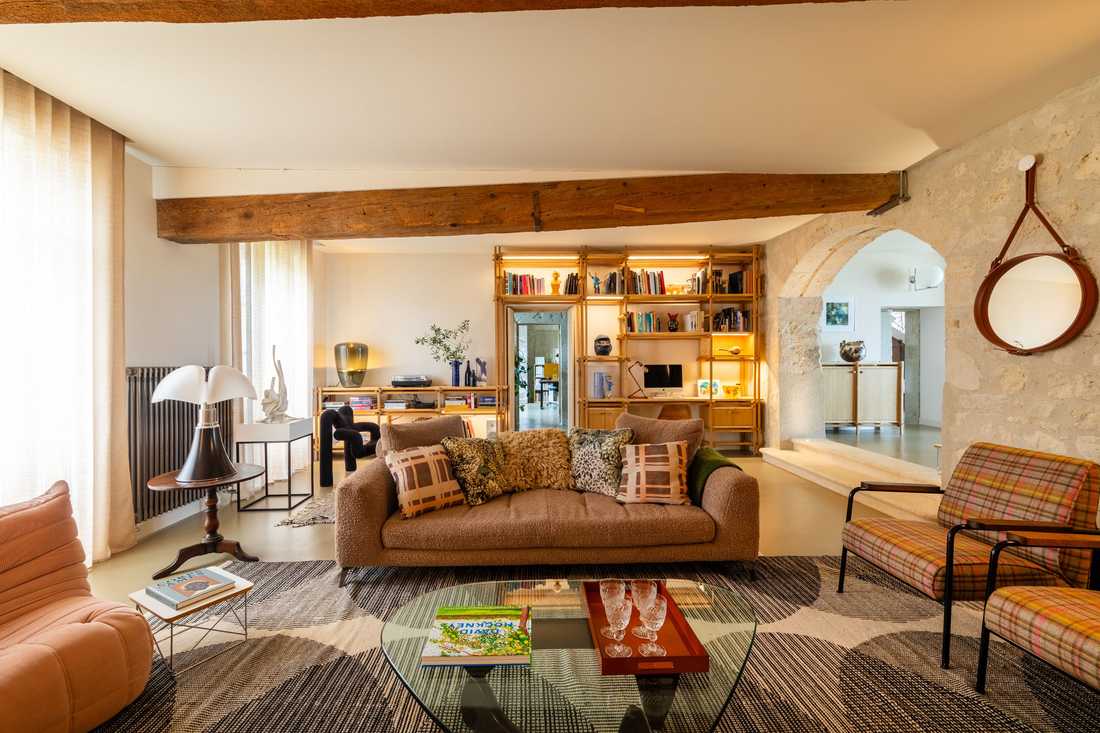
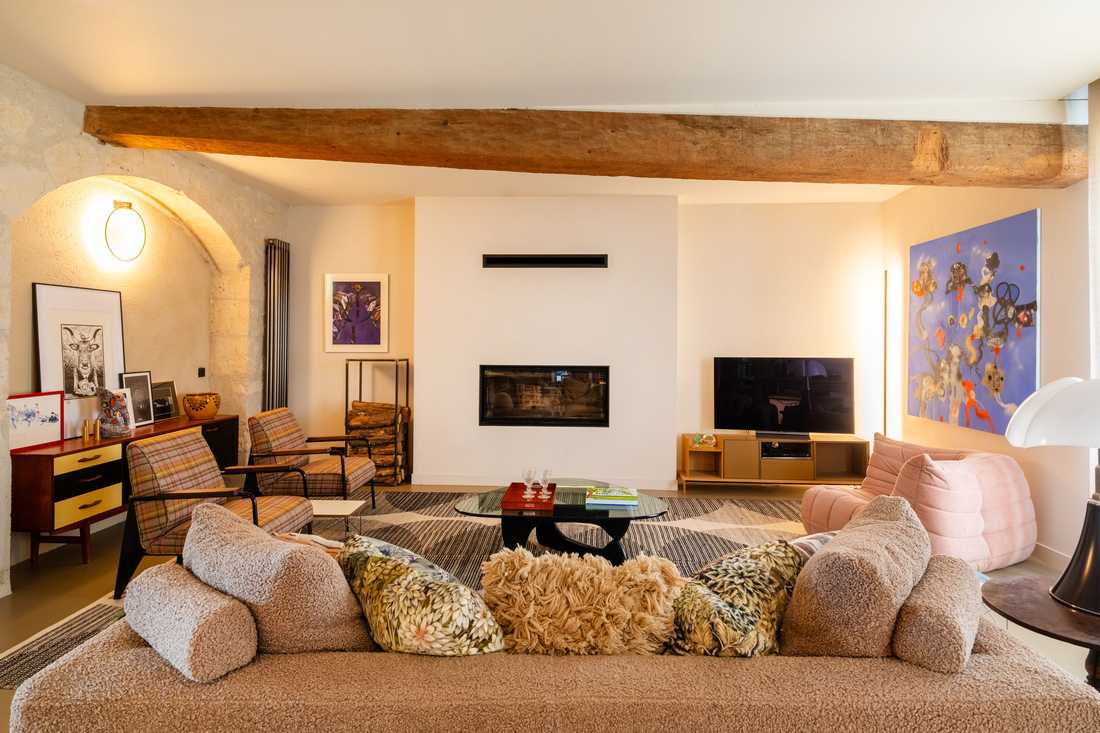
L'architecte d'intérieur du Gers a pris le parti radical d'inverser totalement l'organisation de la maison. Les deux espaces côté rue ont été fusionnés en un vaste salon avec cheminée. Un bureau avec salle de bains, doté d'une entrée indépendante sur le jardinet, a également été aménagé — pouvant à terme évoluer en studio autonome.
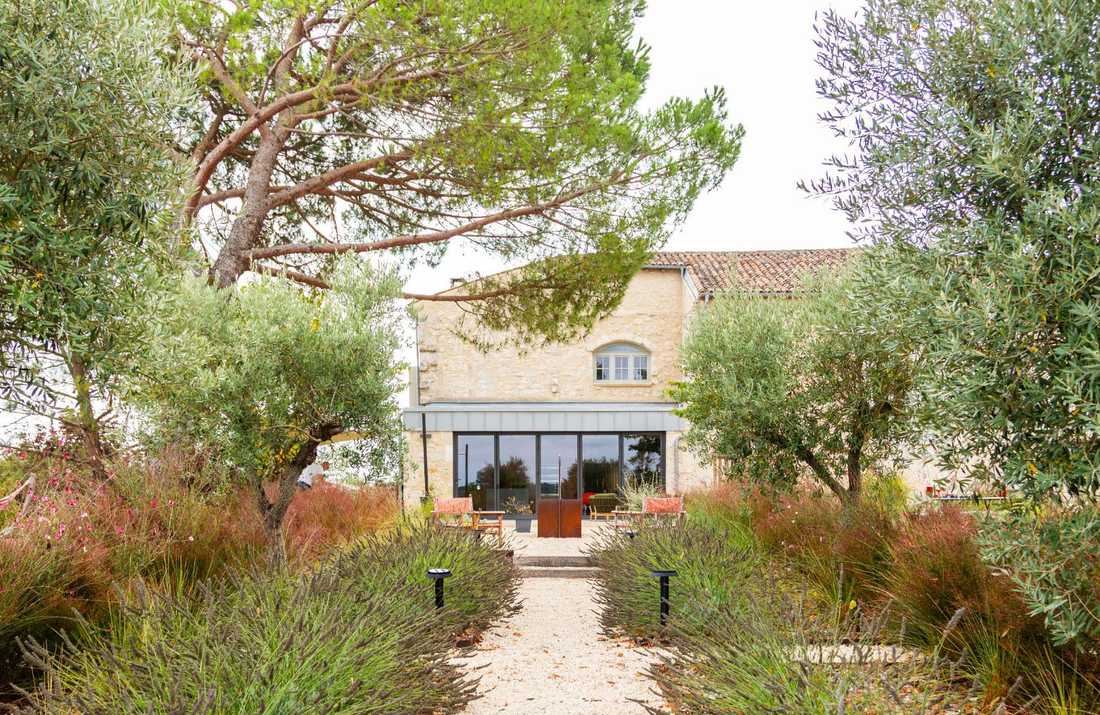
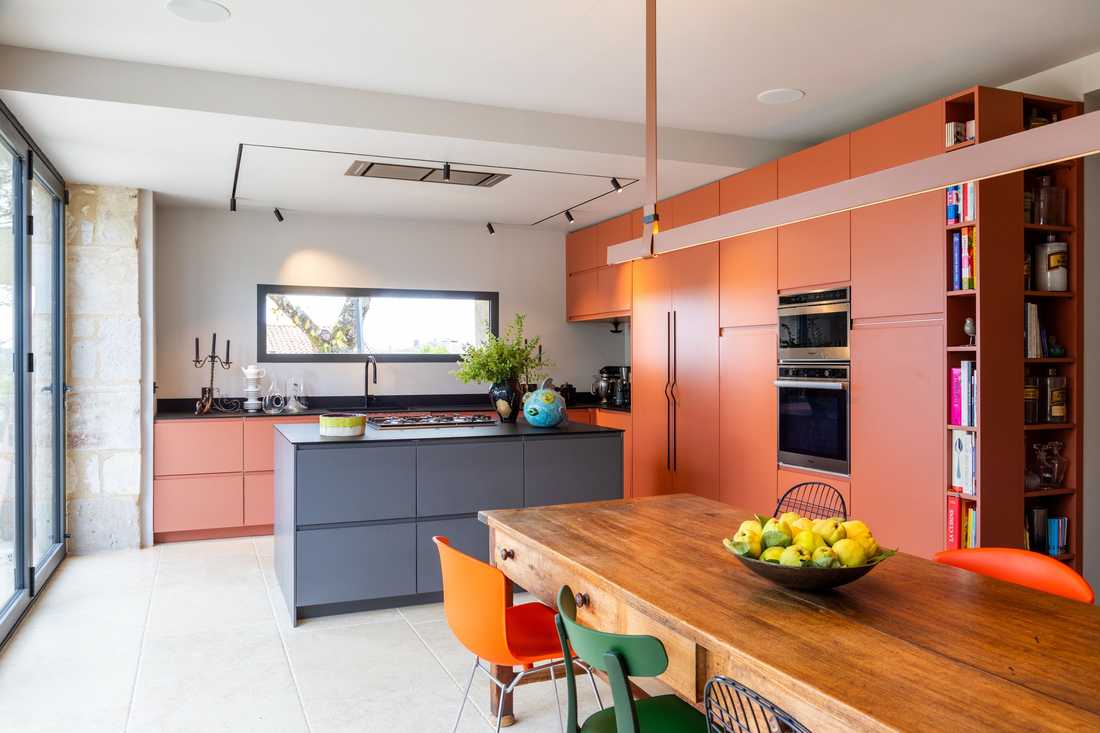
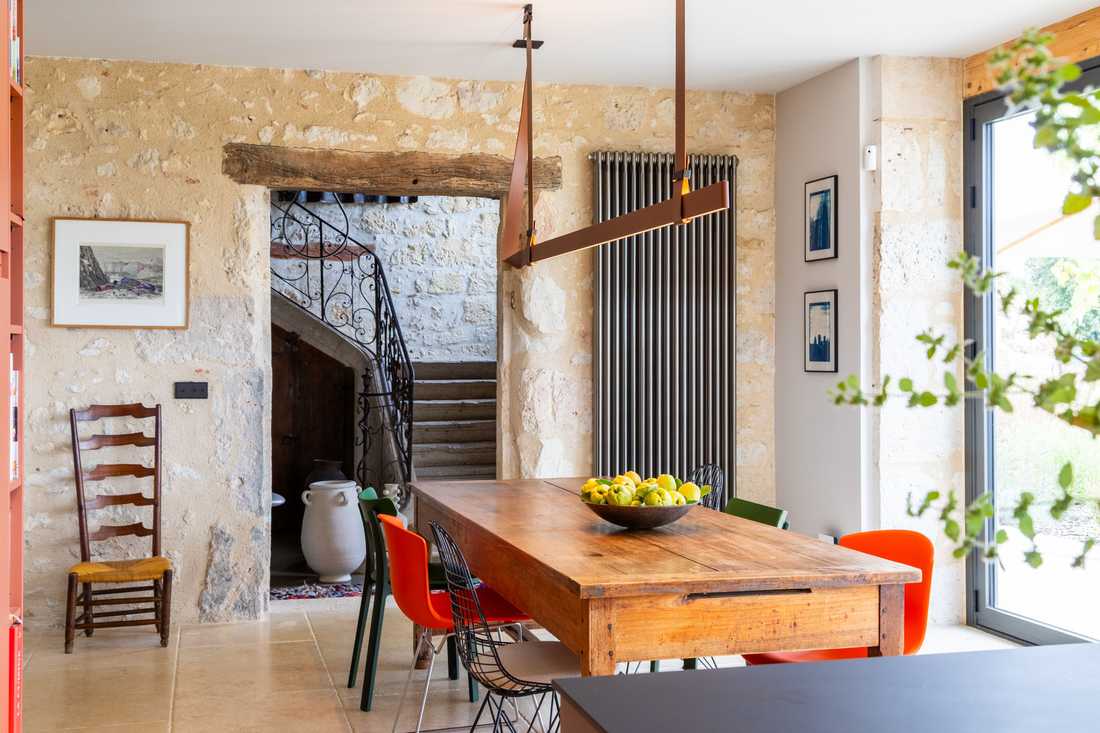
L'entrée se fait désormais côté nord-ouest, là où se trouvaient la chaufferie et un ancien atelier de conserverie. Entièrement reconstruit, cet espace accueille la cuisine et la salle à manger. Une ouverture a été créée dans un mur porteur entre la cuisine et le salon afin de fluidifier les circulations et d'orienter la maison vers le jardin.
Une baie vitrée pour un effet dedans-dehors
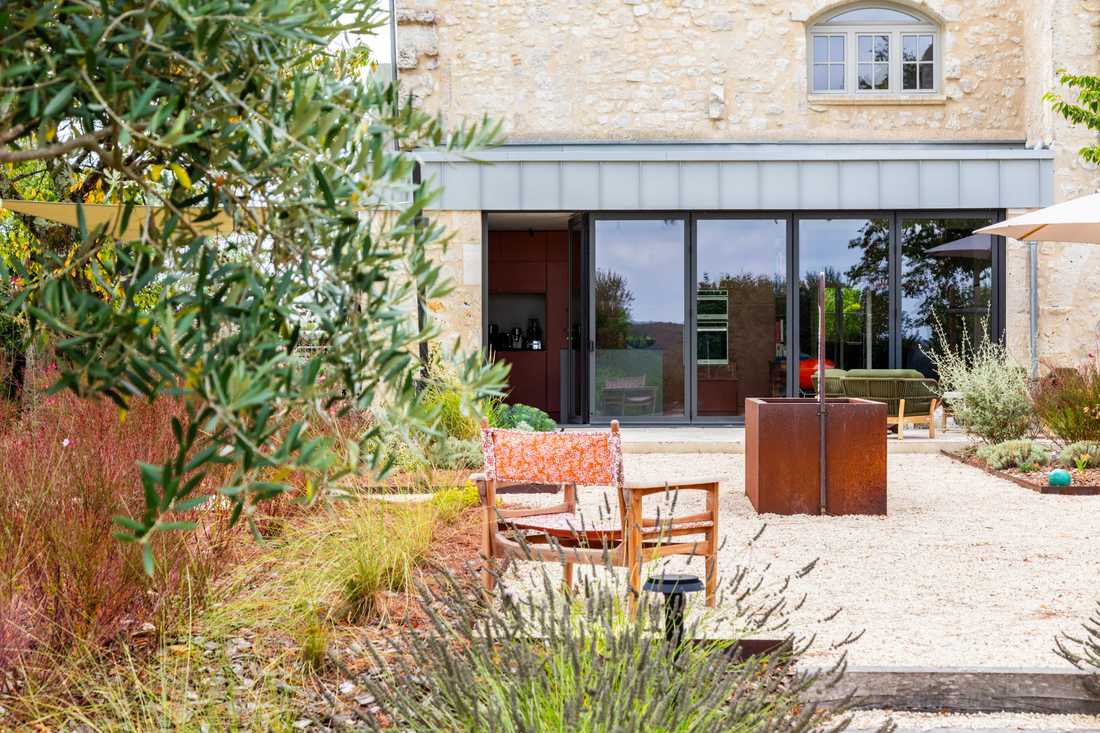
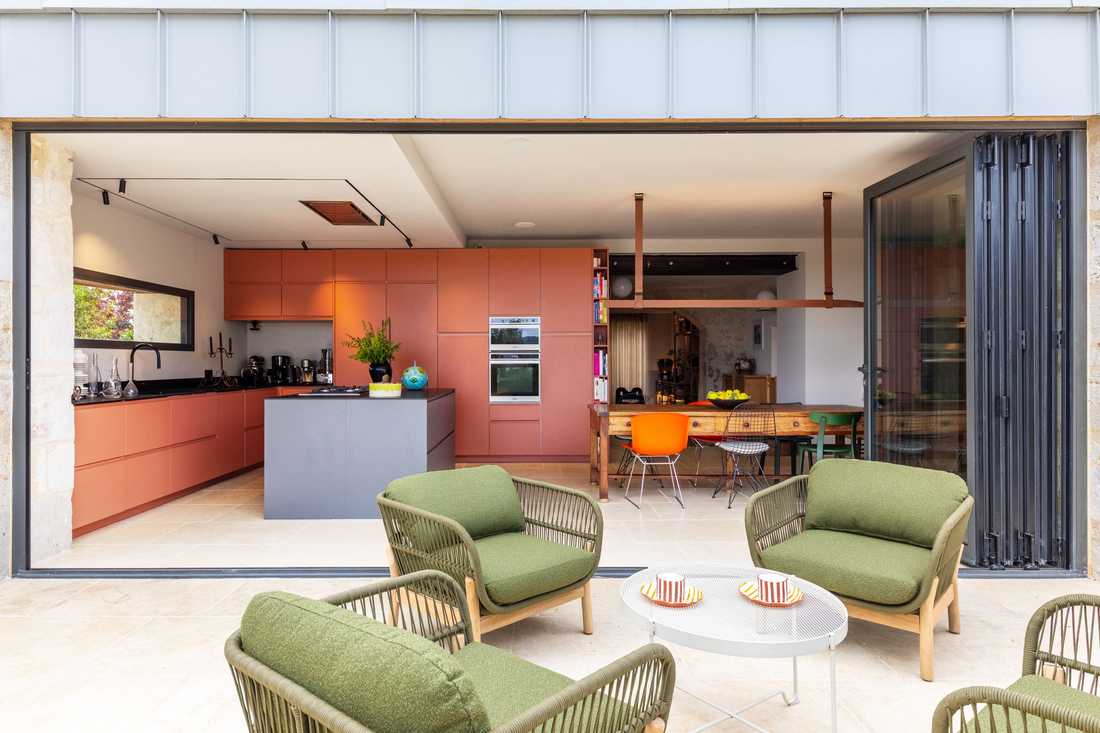
Pièce centrale du nouvel aménagement, une baie vitrée à cinq vantaux en accordéon (Technal) efface la frontière entre intérieur et extérieur. En position totalement ouverte, elle prolonge la cuisine jusqu'à la terrasse.
La continuité de la baie vitrée est assurée par le sol en pierre d'Égypte, identique à l'intérieur comme à l'extérieur. Au-dessus, une imposte renforce la générosité lumineuse de l'espace. La palette chromatique (façades de cuisine coloris terracotta de Bocklip) ancre cet espace dans une atmosphère chaleureuse, loin de tout minimalisme blanc.
Révéler le bâti d'origine
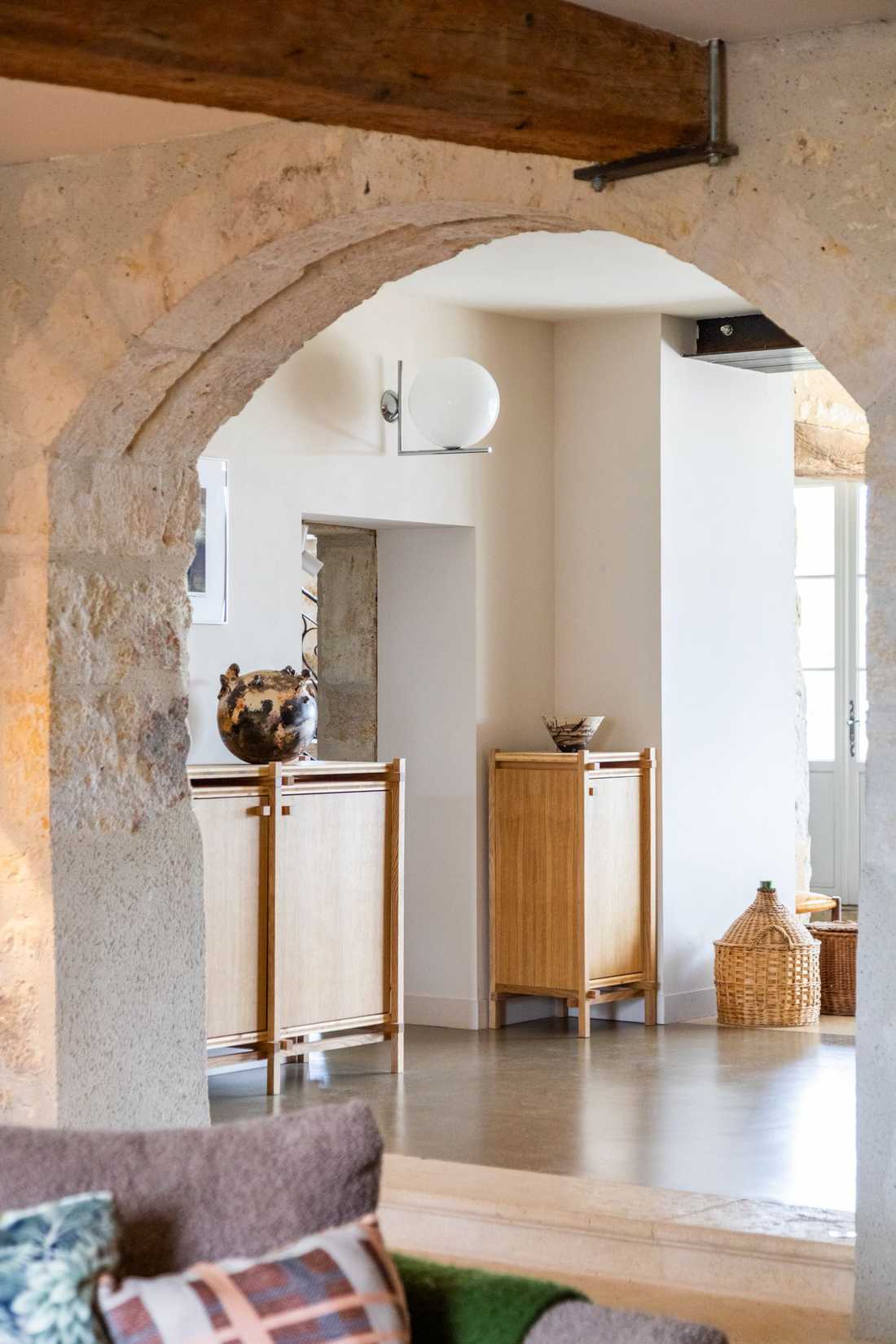
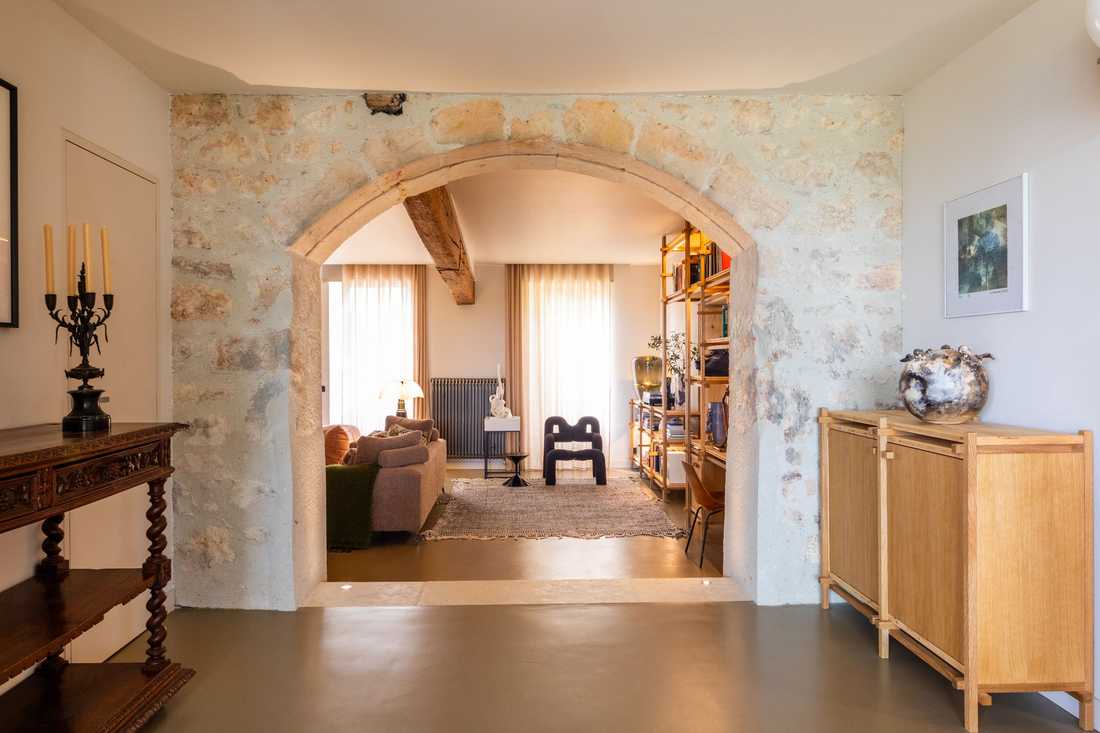
Le chantier de gros œuvre a réservé de belles surprises. En démolissant les cloisons séparant la partie médiévale du reste de la bâtisse, d'imposantes arches ont été mises au jour, évoquant directement un cloître.
Les poutres ont été sablées pour retrouver leur aspect d'origine. À l'étage, le décapage des murs a révélé des parements en pierre à rejointoyer, ainsi que des sections en torchis et à colombages, qui ont été rénovées dans les règles de l'art.
Les planchers bruts du palier et des chambres ont été poncés et vernis afin de conserver l'authenticité de ces revêtements de sol.
Au rez-de-chaussée, un béton ciré coloris Cactus unifie l'ensemble des espaces.
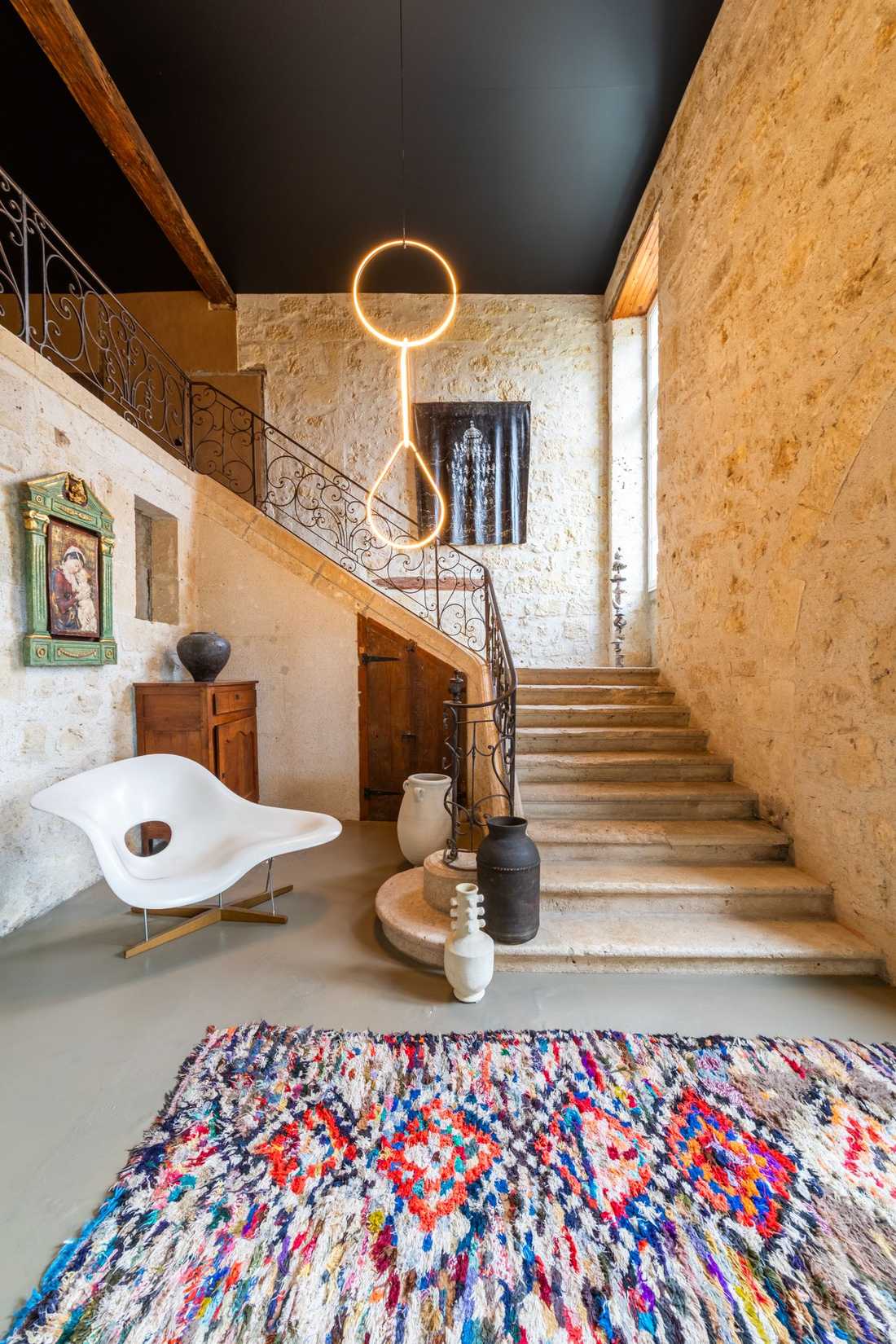
Dans l'entrée, le parti pris d'un plafond tendu noir mat (Barrisol) crée un contraste saisissant qui met en valeur le majestueux escalier en pierre de taille et les murs apparents.
Équilibrer contemporain et patrimoine
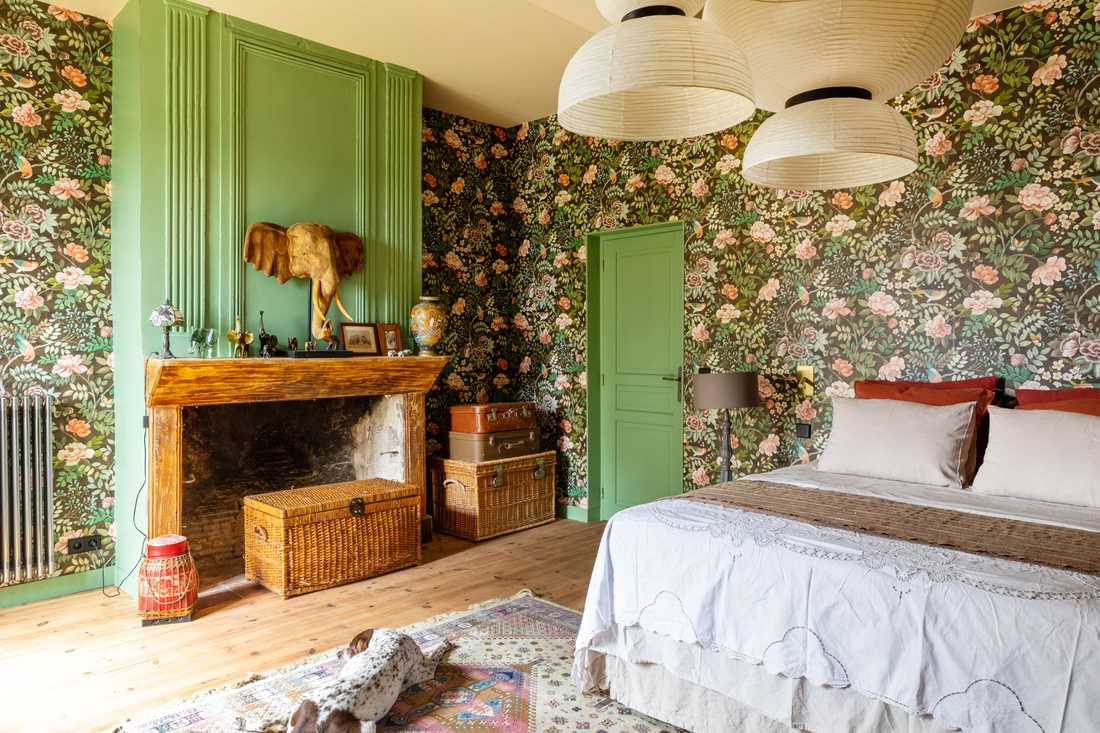
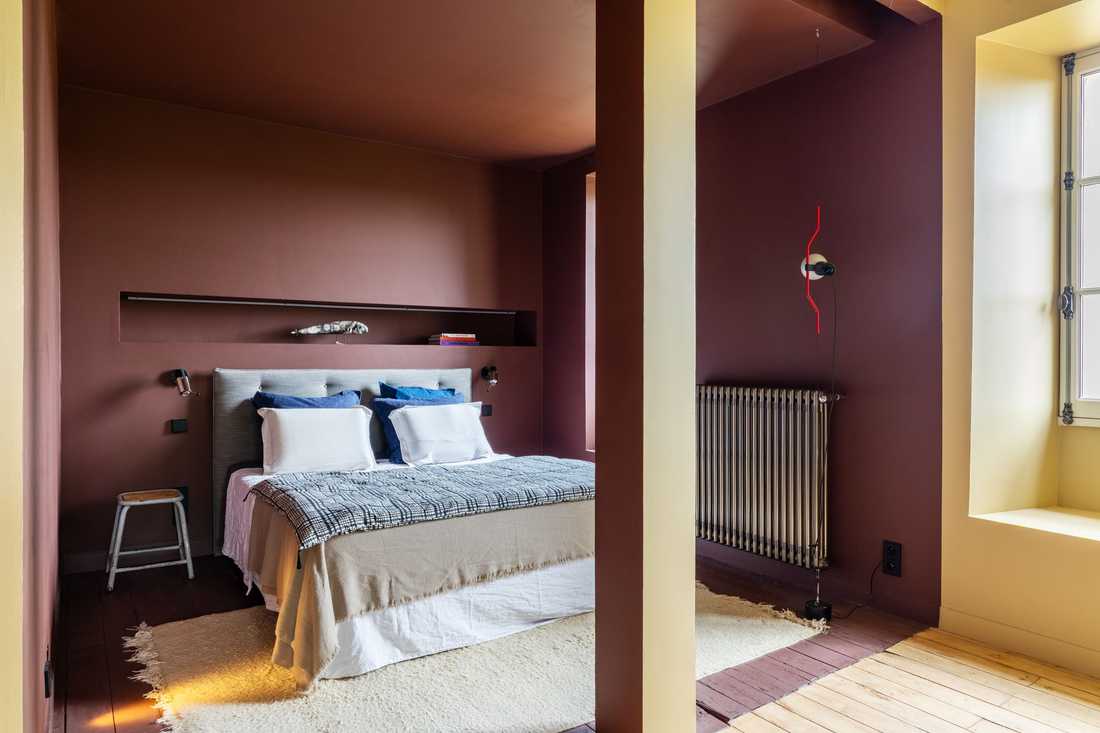
L'architecte d'intérieur a construit une palette chromatique affirmée en sélectionnant des teintes ancrées : vert céladon pour les portes (« Pale Celadon Green » de Ressource), vert anglais pour la chambre d'amis (« Breakfast Room Green », Farrow & Ball), marron argile pour le palier (Argilus). Le papier peint « Porcelaine de Chine Chocolate » de Designers Guild vient habiller la chambre d'amis aux côtés de malles et d'objets chinés.
Le mobilier tisse un dialogue entre design de référence et pièces plus intimes : les fauteuils Jean Prouvé côtoient la chauffeuse « Togo » de Ligne Roset et le canapé « Symbole » de Roche Bobois. On trouve également des pièces chinées et des œuvres d'art qui personnalisent l'ensemble.
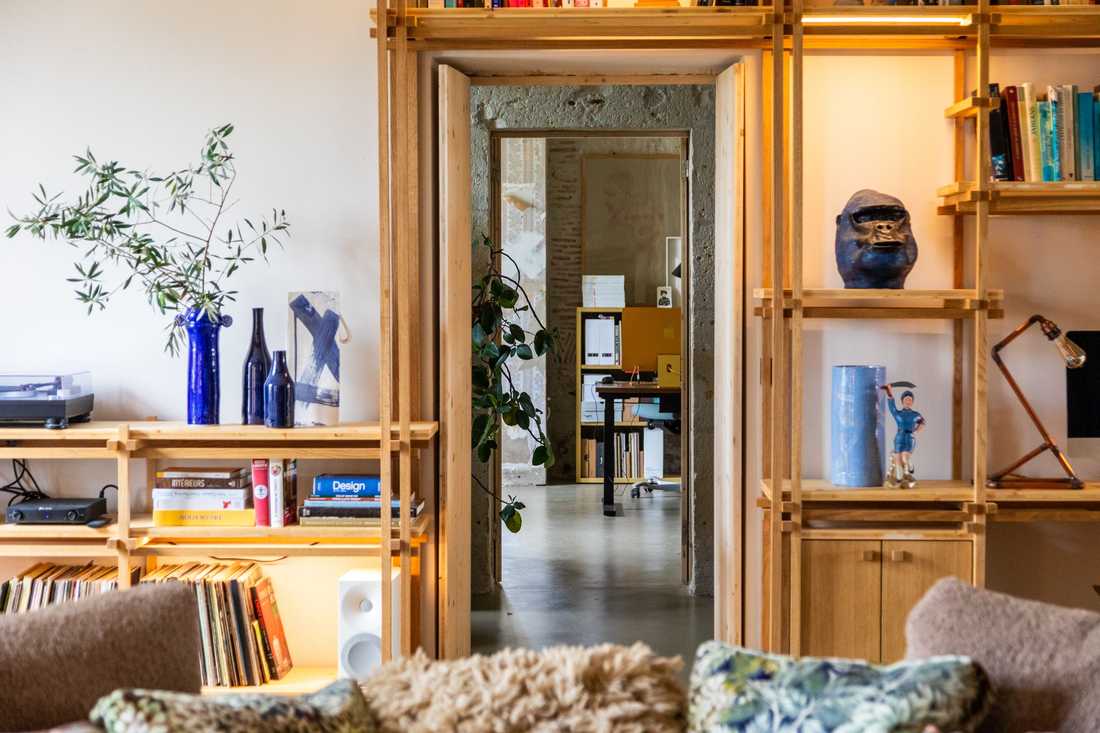
Pour relier les espaces, une bibliothèque sur mesure, inspirée des formes géométriques du fauteuil « Red and Blue » de Rietveld et des jeux Kapla, encadre une porte du sol au plafond, transformant un simple passage en composition murale.
Prolonger la maison vers l'extérieur
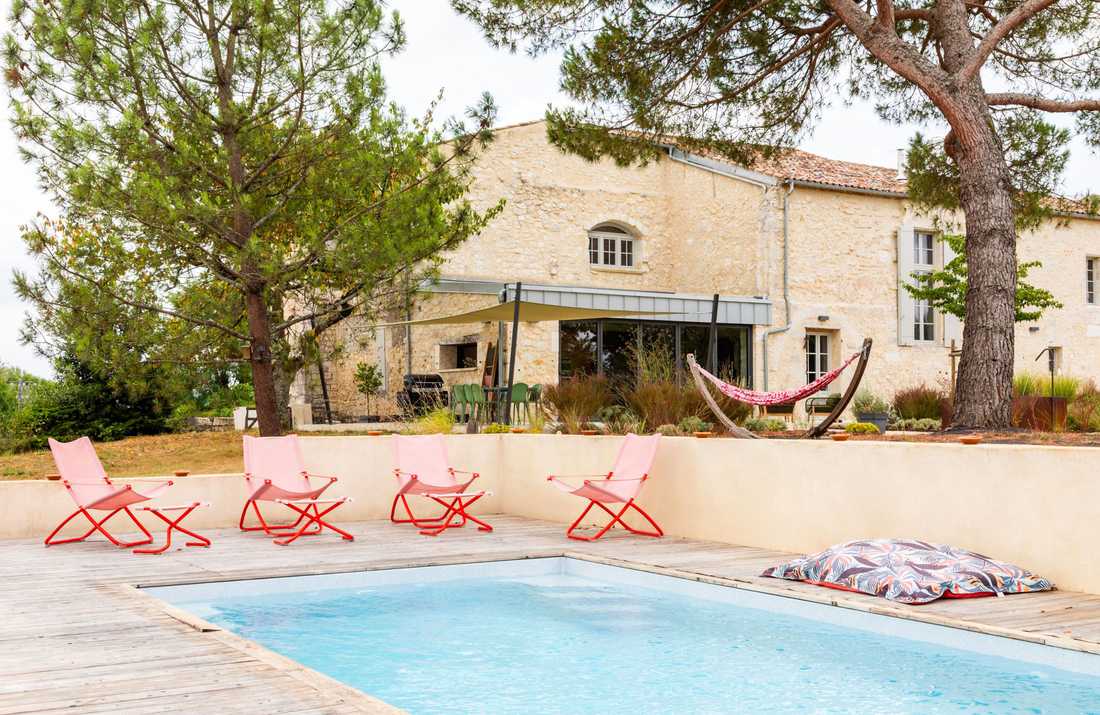
Le jardin a été pensé comme une pièce à part entière. Une piscine en coque australienne (Aqua Pensez-vous ?) y a été intégrée, entourée d'un mobilier extérieur soigné. On y trouve des fauteuils « Snooze » (Emu), des coussins de sol ainsi qu'un voile d'ombrage (Komilfo).
Dans le jardinet latéral, la voûte d'ogive de l'ancienne chapelle reste visible, rappelant discrètement l'histoire pluriséculaire du lieu.
Photos : Pictura / Noémie Lachaume
Reversing the Organization of the House
The first challenge of the project was functional: the house turned its back on the garden. The main entrance was located on the street-facing façade to the southeast, leading to a small living room and a large kitchen.
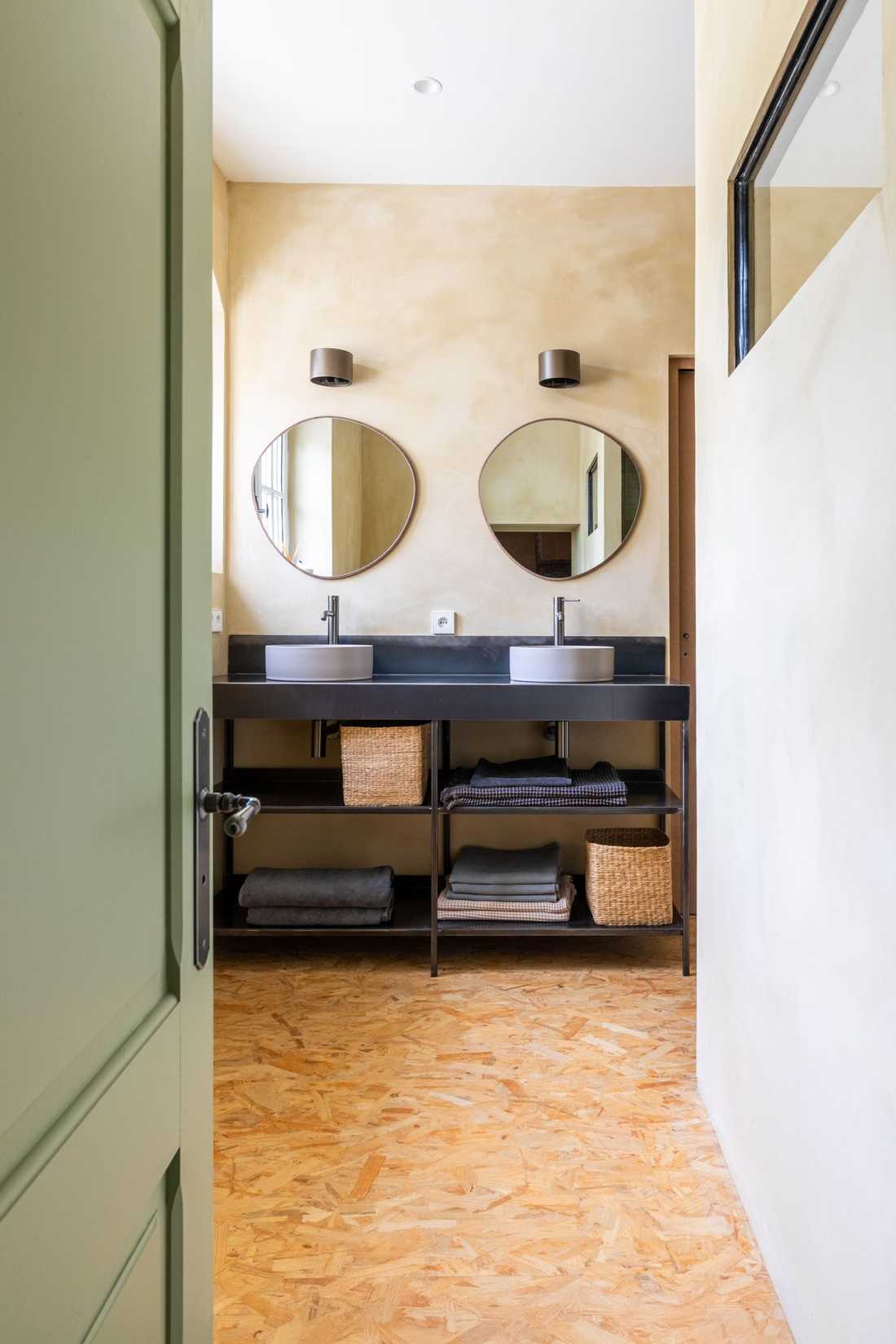
The interior architect in Gers made the bold decision to completely reverse the layout of the house. The two street-side rooms were merged into a spacious living room with a fireplace. A study with an en-suite bathroom and independent access from the side garden was also created, with the possibility of becoming a self-contained studio in the future.
The entrance is now located on the northwest side, where the boiler room and a former canning workshop once stood. Entirely rebuilt, this area now houses the kitchen and dining room. An opening was created in a load-bearing wall between the kitchen and the living room to improve circulation and orient the house toward the garden.
A Folding Glass Wall for Indoor-Outdoor Living
The centerpiece of the new layout is a five-panel folding glass wall by Technal, which removes the boundary between indoors and outdoors. When fully opened, it extends the kitchen seamlessly onto the terrace.
The continuity created by the glass wall is reinforced by the use of Egyptian stone flooring, identical inside and outside. Above, a transom window enhances the generosity of natural light. The color palette (terracotta kitchen fronts by Bocklip) anchors the space in a warm atmosphere, far removed from all-white minimalism.
Revealing the Original Building
The structural renovation work uncovered several remarkable discoveries. During the demolition of partitions separating the medieval section from the rest of the building, impressive arches were revealed, directly evoking the image of a cloister.
The timber beams were sandblasted to restore their original appearance. Upstairs, stripping back the walls revealed exposed stonework requiring repointing, as well as sections of wattle and daub and timber framing, all carefully restored using traditional techniques.
The original wooden floors on the landing and in the bedrooms were sanded and varnished to preserve their authenticity.
On the ground floor, a Cactus-colored polished concrete floor unifies all the living spaces.
In the entrance hall, the choice of a matte black stretched ceiling by Barrisol creates a striking contrast that highlights the majestic cut-stone staircase and exposed masonry walls.
Balancing Contemporary Design and Heritage
The interior architect developed a bold color palette based on grounded tones: celadon green for the doors (“Pale Celadon Green” by Ressource), English green for the guest bedroom (“Breakfast Room Green” by Farrow & Ball), and clay brown for the landing by Argilus. The wallpaper “Porcelaine de Chine Chocolate” by Designers Guild enhances the guest room alongside vintage trunks and carefully sourced decorative objects.
The furniture creates a dialogue between iconic design pieces and more personal finds: Jean Prouvé armchairs sit alongside the “Togo” lounge chair by Ligne Roset and the “Symbole” sofa by Roche Bobois. Vintage furniture and artworks further personalize the interior.
To connect the different spaces, a custom-made bookcase, inspired by the geometric forms of Rietveld’s “Red and Blue Chair” and Kapla blocks, frames a floor-to-ceiling doorway, transforming a simple passage into a striking architectural composition.
Extending the House Outdoors
The garden was designed as a true outdoor room. An Australian-shell swimming pool by Aqua Pensez-vous ? was integrated into the landscape and complemented by carefully selected outdoor furniture, including “Snooze” armchairs by Emu, floor cushions, and a shade sail by Komilfo.
In the side garden, the rib-vaulted ceiling of the former chapel remains visible, discreetly recalling the centuries-old history of the property.
Photos : Pictura / Noémie Lachaume


