Renovation of a 300 m² convent
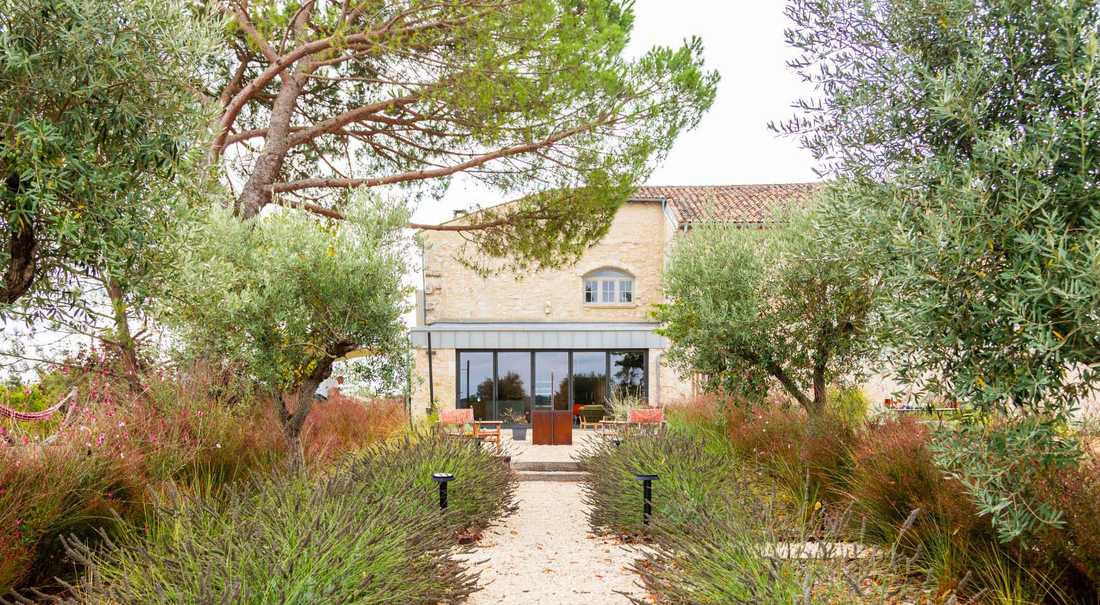
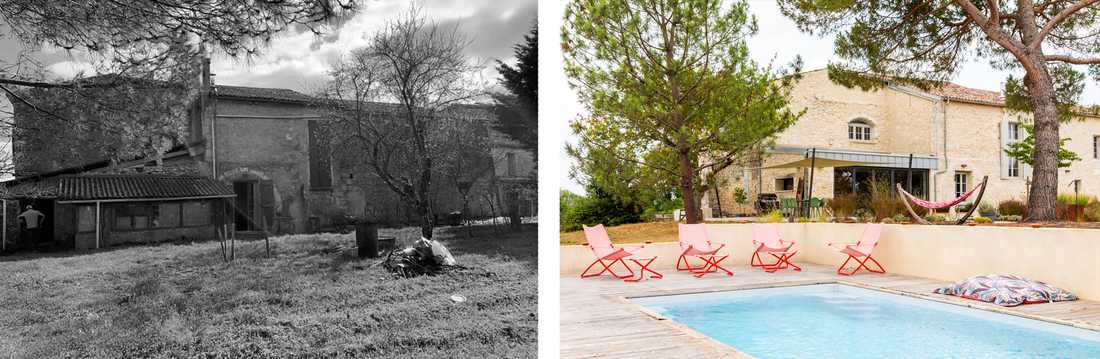
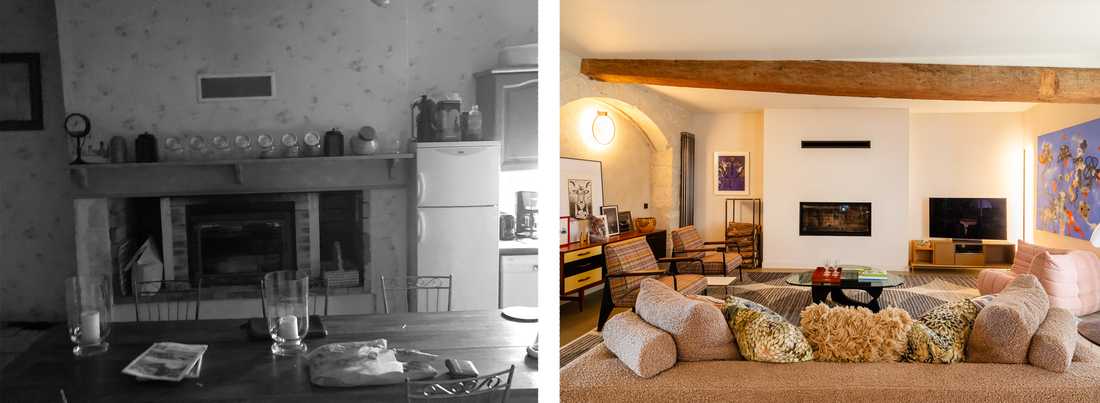
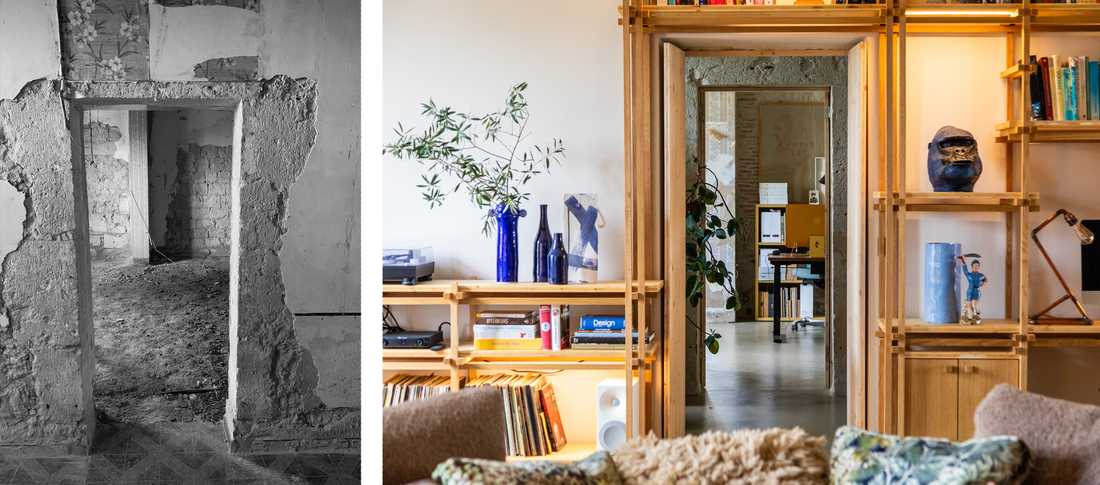
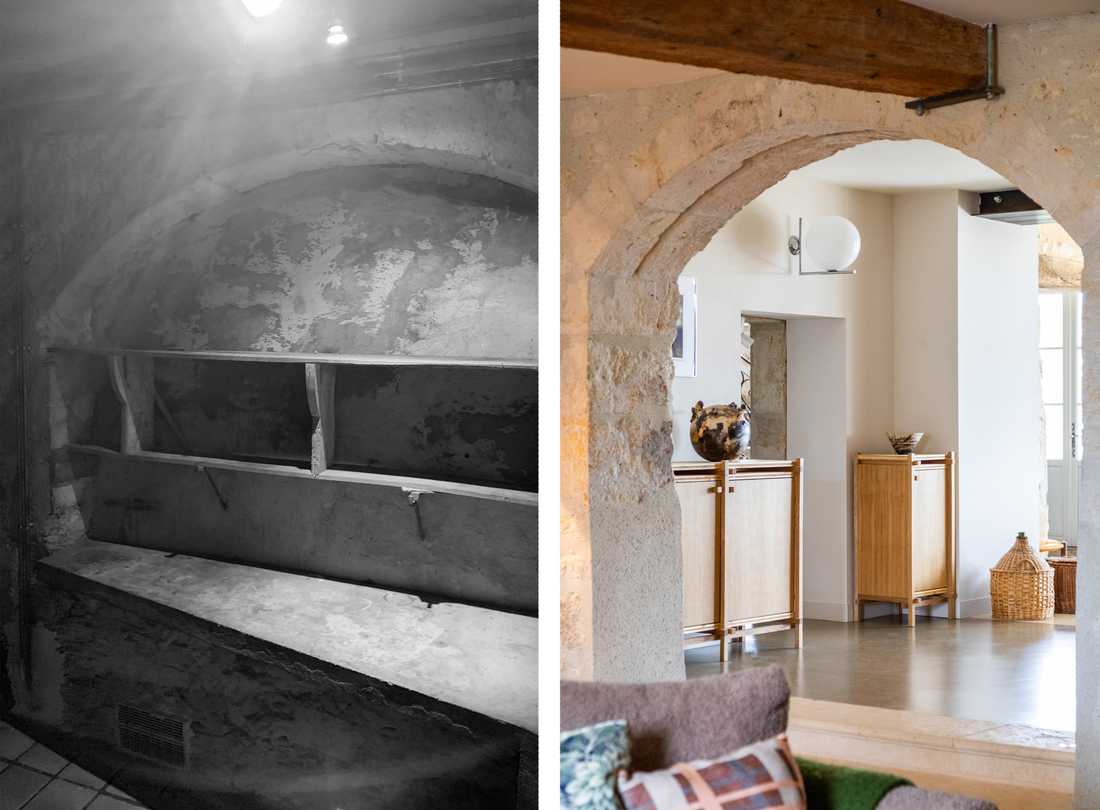
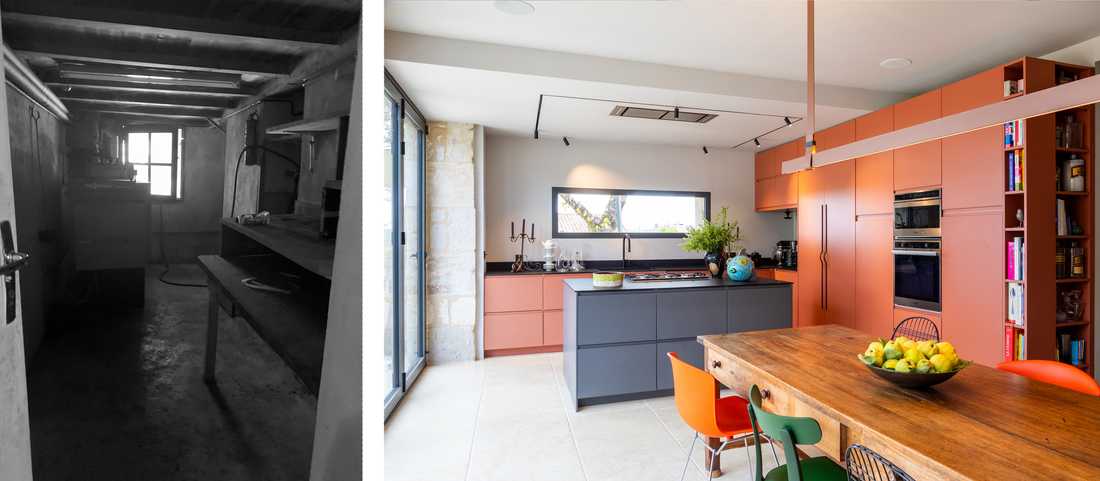
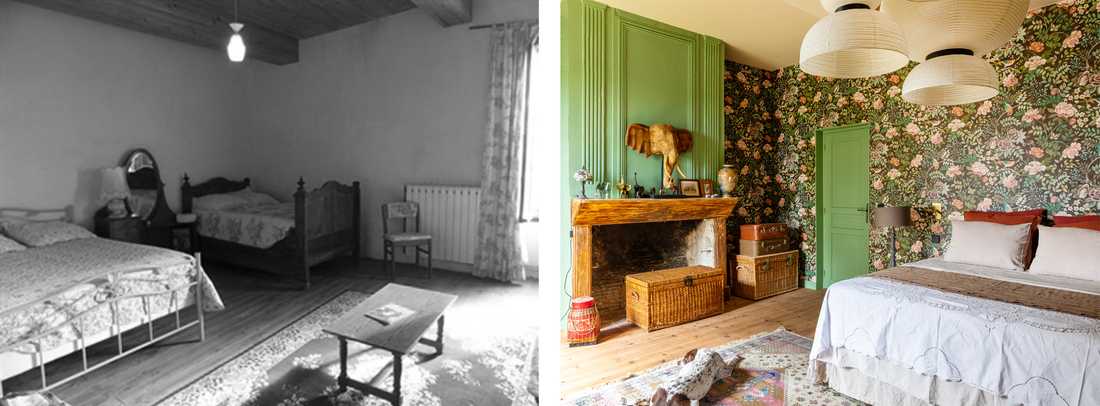
La décision structurante du projet a été d'inverser l'orientation de la maison : l'entrée, jadis côté rue, se fait désormais côté jardin. L'ancienne chaufferie et l'atelier de conserverie ont été entièrement rebâtis pour accueillir la cuisine et la salle à manger, tandis que les espaces côté rue ont été fusionnés en un grand salon avec cheminée.
La baie vitrée à cinq vantaux en accordéon (Technal) est la pièce maîtresse de ce retournement : en s'ouvrant totalement, elle prolonge la cuisine jusqu'à la terrasse, dont le sol en pierre d'Égypte assure une continuité parfaite avec l'intérieur.
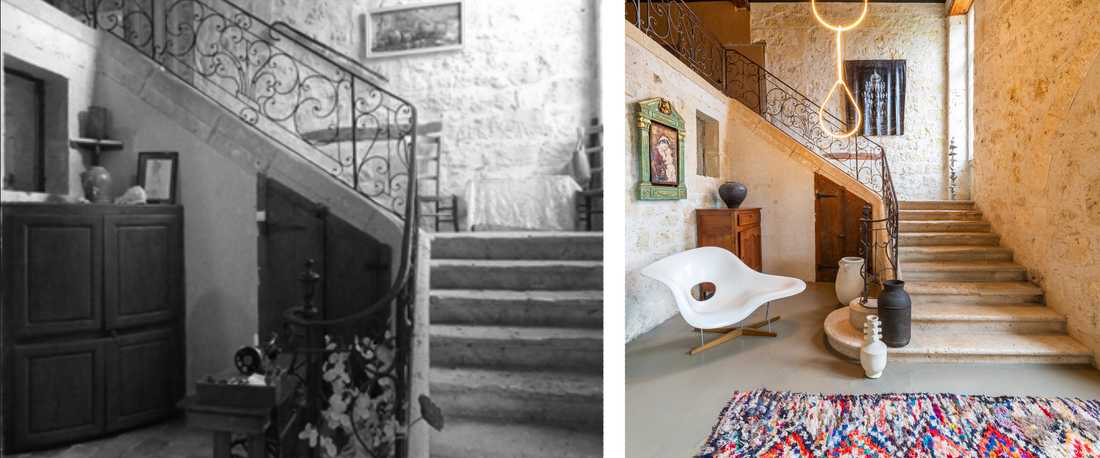
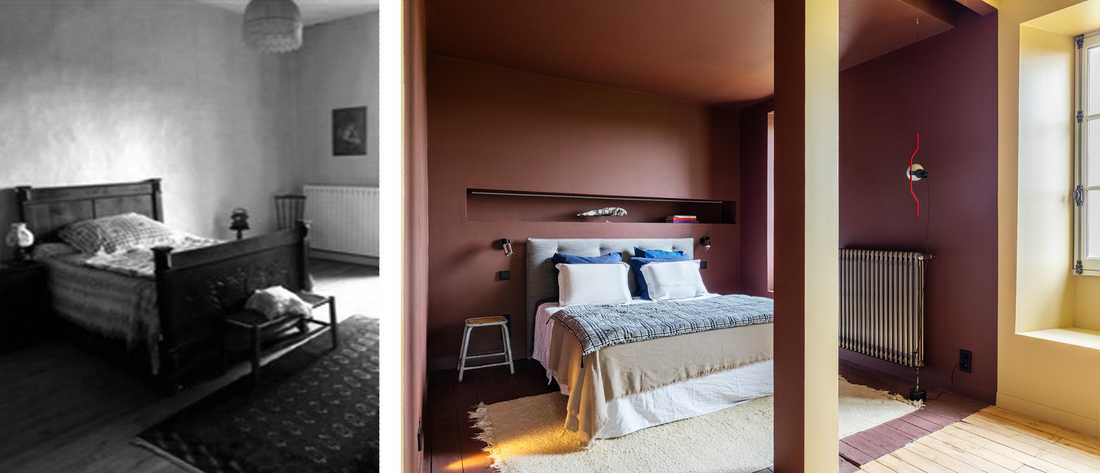
Le chantier a révélé des trésors cachés : arches de cloître, murs en pierre, torchis et colombage dissimulés sous des couches de plâtre et de papier peint. Tous ont été restaurés et mis en valeur, aux côtés des poutres sablées et des planchers poncés conservés à l'étage.
Les choix décoratifs assument une palette chromatique affirmée — pas un centimètre carré de blanc — mêlant mobilier de design (Jean Prouvé, Ligne Roset, Roche Bobois) et pièces chinées, le tout complété par une bibliothèque sur mesure reliant les espaces du sol au plafond.
Enfin, le jardin a été traité comme une pièce extérieure à part entière, avec piscine en coque australienne et mobilier soigné, tandis que la voûte d'ogive du jardinet latéral — vestige de l'ancienne chapelle — rappelle discrètement l'histoire du lieu.
The project's defining decision was to reverse the orientation of the house: the entrance, once located on the street side, is now accessed from the garden. The former boiler room and cannery workshop were completely rebuilt to accommodate the kitchen and dining room, while the street-facing spaces were merged into a large living room with a fireplace.
The five-panel folding glass door (Technal) is the centrepiece of this transformation: when fully opened, it extends the kitchen onto the terrace, whose Egyptian stone flooring creates a seamless transition between indoors and outdoors.
The renovation uncovered several hidden treasures: cloister arches, stone walls, wattle and daub, and timber framing concealed beneath layers of plaster and wallpaper. All were restored and highlighted, alongside the sandblasted beams and refinished wooden floors preserved on the upper level.
The decorative choices embrace a bold colour palette—not a single square metre of white—combining designer furniture (Jean Prouvé, Ligne Roset, Roche Bobois) with carefully sourced vintage pieces. A custom-made bookcase links the different spaces from floor to ceiling.
Finally, the garden was designed as a true outdoor room, featuring a swimming pool with an Australian shell structure and carefully selected furnishings, while the ribbed vault of the side garden—a remnant of the former chapel—subtly recalls the history of the site.


